

Importance of Irrigation for Landscape Maintenance
Imagine stepping into a lush, green oasis, where each blade of grass is a vibrant testament to the wonders of irrigation.
This image isn’t just a matter of aesthetics; it’s the lifeblood of any healthy landscape.
The magic behind this verdant beauty? Sprinkler systems.
But as much as they create these mini paradises, they also pose a crucial question: how much water are they using?
In today’s world, where environmental sustainability is more than a buzzword, understanding the water usage of your sprinkler system is key.
It’s not just about keeping your garden flourishing; it’s about balancing the act of nurturing nature with the responsibility of water conservation.
For homeowners, this knowledge isn’t just empowering – it’s a financial game-changer.
By getting to grips with the gallons your sprinklers guzzle, you’re taking a step towards more cost-effective gardening practices.
Factors that Influence Water Usage in Irrigation Systems

Size of the Area Being Watered
Firstly, let’s talk about lawn size. It’s straightforward: the larger your lawn, the more water it drinks.
A sprawling yard will naturally require more water to stay lush compared to a modest patch of grass.
This factor is the primary driver of water consumption in sprinkler systems.
Plant Types and Soil Conditions
Then, consider the type of plants and the soil conditions.
Some plants are thirstier than others, demanding more water.
Similarly, soil types vary in their water retention abilities.
Sandy soils, for instance, drain quickly and may require more frequent watering.
Whereas, clay soils hold moisture longer, reducing the need for frequent irrigation.
Local Climate and Weather Patterns
The local climate and weather patterns add another layer to this puzzle.
In regions with frequent rain, sprinkler systems can take a back seat, reducing water usage.
On the other hand, in dryer climates or during hot summers, your system might need to work overtime to compensate for the lack of natural precipitation.
Installed Sprinkler Heads
Lastly, the type of sprinkler heads attached to an irrigation system significantly impact its water usage.
Some designs are more efficient, distributing water evenly and reducing waste, while others might lead to over-watering.
Average Water Usage of Residential Sprinkler Systems
The water usage of a sprinkler system per minute largely depends on the type of sprinkler heads used and the number of irrigation zones.
On average, a single irrigation zone with multiple sprinkler heads can use from 15 to 20 gallons of water per minute.
Therefore, a typical sprinkler system with four irrigation zones uses from 60 to 80 gallons of water per minute.
A larger sprinkler system with eight irrigation zones will use from 120 to 160 gallons of water per minute.
As you can see, this could easily add up to several hundred gallons of water per hour.
Estimating Your Usage with the Irrigation Water Meter
Estimating the water usage of a sprinkler system with an irrigation water meter is a straightforward task.
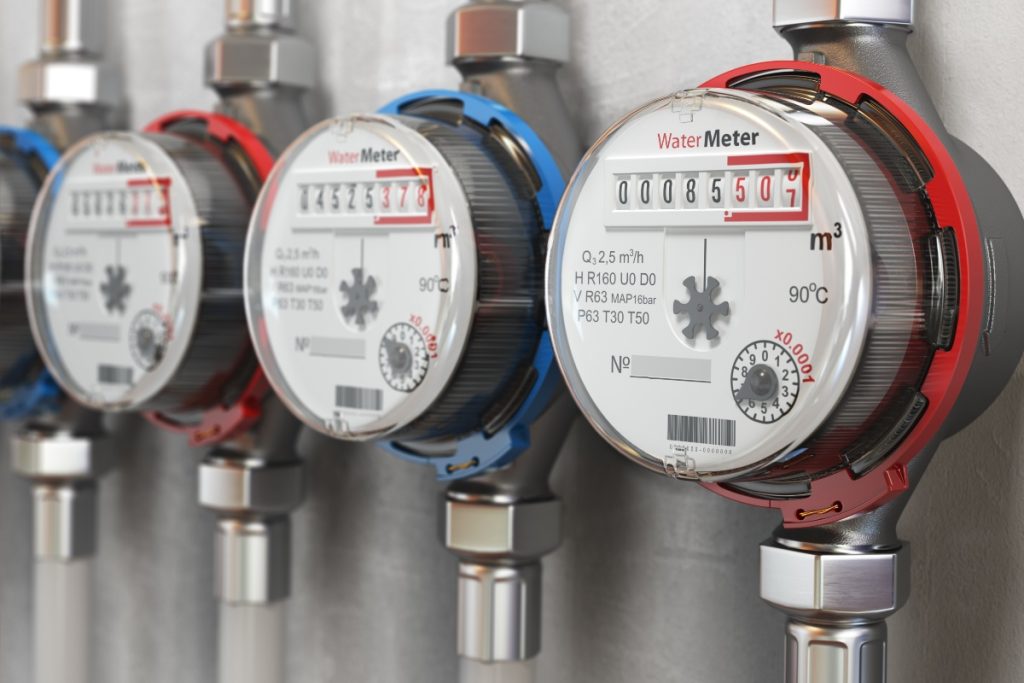
Let’s start by looking at the irrigation water meter, which is your key tool in this process.
It’s typically installed inside the valve box of your sprinkler system.
This meter is designed to measure the volume of water passing through it, usually in gallons.
To begin, record the initial reading on the meter before you start the sprinkler system.
Next, run your sprinkler system for a known period, say one hour.
After the set time has elapsed, it’s time to take another reading from the irrigation water meter.
This second reading will be higher than the first, indicating the total volume of water used during the time your sprinklers were running.
Now, here’s where a bit of simple math comes in. Subtract the initial meter reading from the final reading.
This difference gives you the total amount of water used during the time period your sprinkler system was active.
If you noted how long the system was on, you can even break this down to a per-minute usage rate.
Methods to Reduce the Water Usage of an Irrigation System
Unlocking the secrets to minimizing water usage in sprinkler systems is like embarking on a quest for the holy grail of garden efficiency.
It’s about smart strategies, a little innovation, and a commitment to sustainable practices.
Adjusting the Watering Schedules
Timing is everything. Let’s start with adjusting watering schedules.
Watering during the cooler parts of the day, typically early morning or late evening, reduces water loss through evaporation.
This simple adjustment can significantly cut down on water usage while still providing your lawn with the hydration it needs.
Upgrading to More Efficient Sprinkler Heads
Upgrading to more efficient sprinkler heads is another game-changer.
Technology has gifted us with sprinkler heads that are not only smarter but also more water-efficient.
These modern marvels reduce wastage, ensuring that water goes exactly where it’s needed.
Adding Drip Irrigation to the System
Finally, consider integrating drip irrigation for targeted watering.
This method is the sharpshooter of irrigation, delivering water directly to the roots of your plants.
It’s especially useful for garden beds, vegetable patches, and shrubs.
Drip irrigation is a superb way to ensure deep, thorough watering with minimal waste.


