

Understanding Sprinkler Lines
The Function of Irrigation Lines
Sprinkler lines are the lifeline of any irrigation system, quietly working beneath the surface.
These underground pipes transport water from your main supply to the sprinkler heads, ensuring your garden receives a uniform distribution of moisture.
By operating beneath the surface, they also maintain the aesthetic appeal of your landscape.
Choosing the Right Material
When it comes to selecting the material for your sprinkler lines, PVC stands out for its durability and cost-effectiveness.
PVC pipes resist corrosion, making them a long-lasting choice for your irrigation needs.
Their lightweight nature simplifies installation, and they offer flexibility in terms of pressure ratings, catering to various lawn sizes.
Determining the Pipe Size
The size of the sprinkler pipe plays a pivotal role in the efficiency of your irrigation system.
Generally, a diameter of at least ¾ inch is recommended.
This size strikes a balance between providing sufficient water flow and maintaining water pressure.
Importance of Depth for Irrigation Lines
Performing Maintenance and Repairs
The depth at which sprinkler lines are buried is not just a random choice; it’s a strategic decision impacting long-term maintenance.
By burying lines at the correct depth, you gain easier access for repairs.
This accessibility is crucial for promptly addressing leaks, which are inevitable over time.
Preventing Accidental Damage
Depth is a protective shield for your sprinkler lines.
When lines are too shallow, they’re vulnerable to damage from routine gardening activities.
This accidental damage can lead to costly repairs.
By burying your lines deeper, you effectively safeguard them from common yard maintenance tasks.
Protecting from Cold Temperatures
For those living in areas with freezing temperatures, the depth of sprinkler lines is a critical factor for winter protection.
When lines are not buried deep enough, they risk being damaged by freeze-thaw cycles.
This can lead to cracks, resulting in significant damage.
Burying your lines below the frost line keeps them insulated from extreme cold.
Recommended Depth for Sprinkler Lines
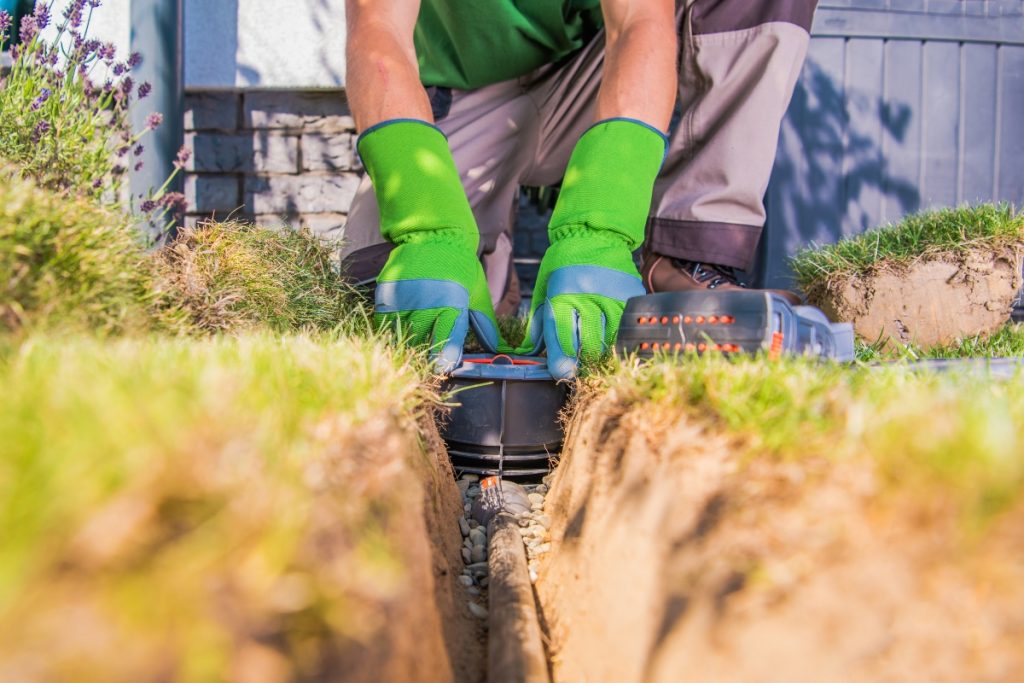
Warm Climates
In warm climates, where the ground rarely, if ever, freezes, burying sprinkler lines at a depth of 8 inches is typically sufficient.
It’s deep enough to protect the pipes from routine yard maintenance activities, yet shallow enough to allow for easier access if repairs are needed.
Mild Climates
For those living in mild climates, where freezing temperatures are occasional but not severe, a depth of 10 inches is advisable for sprinkler lines.
This extra depth provides an added layer of protection against occasional cold snaps.
It also ensures that the lines remain unaffected by moderate temperature fluctuations, maintaining the integrity of the irrigation system throughout the changing seasons.
Cold Climates
In cold climates, where the ground freezes regularly, burying sprinkler lines at least 12 inches deep is essential.
This depth ensures that the lines lie well below the frost line, protecting them from freeze-thaw cycles that can cause cracking.
By positioning the lines at this depth, you effectively shield them from the harsh winter conditions, ensuring a resilient irrigation system.
Depth for Installing Sprinkler Heads
Type of Sprinklers that Go Underground
Irrigation systems commonly use two types of sprinklers: stationary and pop-up.
Stationary sprinklers are fixed in place, constantly exposed above the ground.
In contrast, pop-up sprinklers are placed underground and only emerge when the system is active.
Matching the Depth of the Irrigation Lines
For pop-up sprinklers, the depth of installation is crucial for optimal performance.
These sprinklers should be installed at a depth that aligns with the top of the sprinkler head flush with the ground level.
This setup allows the sprinklers to rise and retract smoothly, minimizing the risk of damage from daily activities.
It also ensures even water distribution, as the sprinkler heads can fully extend to their intended height.
Tips for Trenching a New Sprinkler System

Marking the Utility Lines to Prevent Damage
Before you start digging trenches for your new sprinkler system, it’s crucial to mark all underground utility lines.
This step is not just a safety precaution; it’s a necessity.
Accidentally cutting through a gas line, electrical wire, or water pipe can lead to dangerous situations.
Contacting your local utility companies to mark the lines ensures that your trenching work is safe.
Mapping the Placement of Irrigation Lines
Planning is key in trenching for a sprinkler system.
Create a detailed map of your yard, noting the locations of trees, shrubs, and other landscape features.
This map should outline where each sprinkler line will go, considering the coverage area of each sprinkler head.
A well-thought-out plan helps in efficient water distribution and reduces the need for future adjustments.
Using a Chainsaw to Remove Roots
Encountering roots while trenching is common, especially in established yards. Using a chainsaw can make this task much easier.
It’s important to cut through roots cleanly to minimize the damage.
Remember, preserving the health of your existing landscape is as important as installing a new irrigation system.
Measuring the Trench from Various Points
Consistency in trench depth is essential for a successful sprinkler system installation.
Regularly measure the depth of your trench from various points to ensure it meets the recommended depth for your climate.
This uniformity is vital for protecting your pipes from external elements.
Compacting Soil Around the Pipes
After laying your sprinkler lines, compacting the soil around them is a step that should not be overlooked.
Proper soil compaction eliminates air pockets, which can cause pipes to shift over time.
It also ensures that the ground surface remains even and stable, maintaining the aesthetic appeal of your landscape.


